FilmFest Hamburg announces its programme
Responses to the state of the world
8. September 2026
Current works by internationally renowned directors, award-winning festival films and new voices: FilmFest Hamburg will be showing 114 films from 64 countries in ten sections from 24 September to 3 October 2026. The festival will open with The Idiot(s) by Małgorzata Szumowska and Michał Englert, and close with Ha-Chan, Shake Your Booty! by Josef Kubota Wladyka. On 3 October, FilmFest Hamburg is once again hosting its »Free Admission Day«. Oscar-winning actress Helen Mirren will be honoured with the Douglas Sirk Award, and Małgorzata Szumowska and Lukas Dhont are this year’s “Filmmakers in Focus”. Other international and national festival guests include Cristian Mungiu, Andrey Zvyagintsev, Martin McDonagh, Wim Wenders, Petra Volpe, and Emily Atef. International producers, distributors, world sales agents and other industry representatives will be gathering at the FilmFest Hamburg Industry Days from 28 September to 1 October.
With an eye on contemporary society, three motifs that link many of this year’s films emerge: freedom, connection and new beginnings. They explore issues that are addressed both politically and personally: in societies under pressure, within families and friendships, and in life situations where change becomes necessary.
In many of the selected films, freedom is not a given state, but something that must be sought, defended, tried out and, at times, endured.
In the world premiere Children of the Sun by Leonie Krippendorff, four young people, two of them played by Lena Urzendowsky and Jella Haase, embark on an experiment in living a radically free life and must discover just how much freedom a community can tolerate. In THE OTHER SIDE by Mariko Minoguchi, Nina Hoss plays a doctor ostracised by society who sets off into the solitude of the mountains and ultimately towards a different life. For the documentary Gabin, Maxence Voiseux accompanied his protagonist for over ten years: Gabin is supposed to take over his family’s butcher’s shop one day, but loves animals and dreams of a different life. The question of freedom is explored from a political perspective in Rehearsals for a Revolution by Pegah Ahangarani. Personal and collective memories create a panorama of four decades of Iranian history, carried by the ever-recurring hope for freedom. In Biermann, Jens Meurer portrays the artist and dissident Wolf Biermann, using rare historical film and music footage to trace a life caught between resistance and exile in his own country. In A Life, A Manifesto, Jean-Gabriel Périot reconstructs the life of film critic, filmmaker and activist Michèle Firk and, linking film history with political activism. Everybody to Kenmure Street by Felipe Bustos Sierra, in which a neighbourhood in Glasgow stands up against the deportation of two residents, and Strawberries by Laïla Marrakchi about Moroccan seasonal workers in Andalusia tell of collective resistance. In Cooking Up Democracy, Monika Treut turns her attention to democratic practice and civil society in Taiwan. In Until the Day Ends by Jelena Maksimović, political unrest and a personal desire to break free collide during a night of protests in Belgrade. You Know Me, Now Forget It by Denise Vieira also explores self-determination and a safe haven for women who defy moral control. In The Girl with the Leica by Alina Marazzi, the camera becomes an instrument of political resistance for photojournalist Gerda Taro.
Connection is less about a harmonious state than something that is sought, lost, restored or reinvented.
In the world premiere of Call Me Queen by Emily Atef, the friendship between a single mother in 1990s Nairobi and an Irish journalist becomes the starting point for solidarity. In Frank & Louis, Petra Volpe tells the story of two men who meet in a US prison and develop an unexpected bond through mutual care. In Words of Love by Rudi Rosenberg, a mother and her daughter set out together in search of a missing father and, in the process, grow closer to one another. In Look Back, Hirokazu Kore-eda explores friendship and artistic connection, and of how profoundly another person can shape one’s own life. I spy with my little eye by Alisa Kolosova is about two women who, following the death of their best friend, take on responsibility for her daughter and, in doing so, must also redefine their own relationship. Hearing by Lê Bảo revolves around familial distance and lost connections. In Ramón Vázquez by Gustavo Fontán, an unemployed man finds a new community among people on the fringes of society. Clarissa by Arie Esiri and Chuko Esiri relocates Virginia Woolf’s Mrs Dalloway to present-day Lagos and explores friendships, past relationships and repressed longings. The documentary The Cycle of Love by Orlando von Einsiedel tells a real love story across continents.
A new beginning often starts where a previous way of life no longer holds up.
In The Last Day, Rachel Rose tells the story of a New York summer’s day and the question of whether it may be too late to start again. In Club Kid, Jordan Firstman’s directorial debut, a party king of New York’s nightlife suddenly becomes a full-time father and has to reinvent his life. In Zejtune, Alex Camilleri sends a young woman on a journey through Malta: she actually wants to leave the island, but along the way her perspective on home and her origins changes. In Butterfly by Itonje Søimer Guttormsen, two estranged sisters return to the place of their childhood after the death of their mother. In Pınar Yorgancıoğlu’s Those Who Whistle After Dark, a family’s stagnant life plans are set in motion once more.
Award-winning productions and other highlights
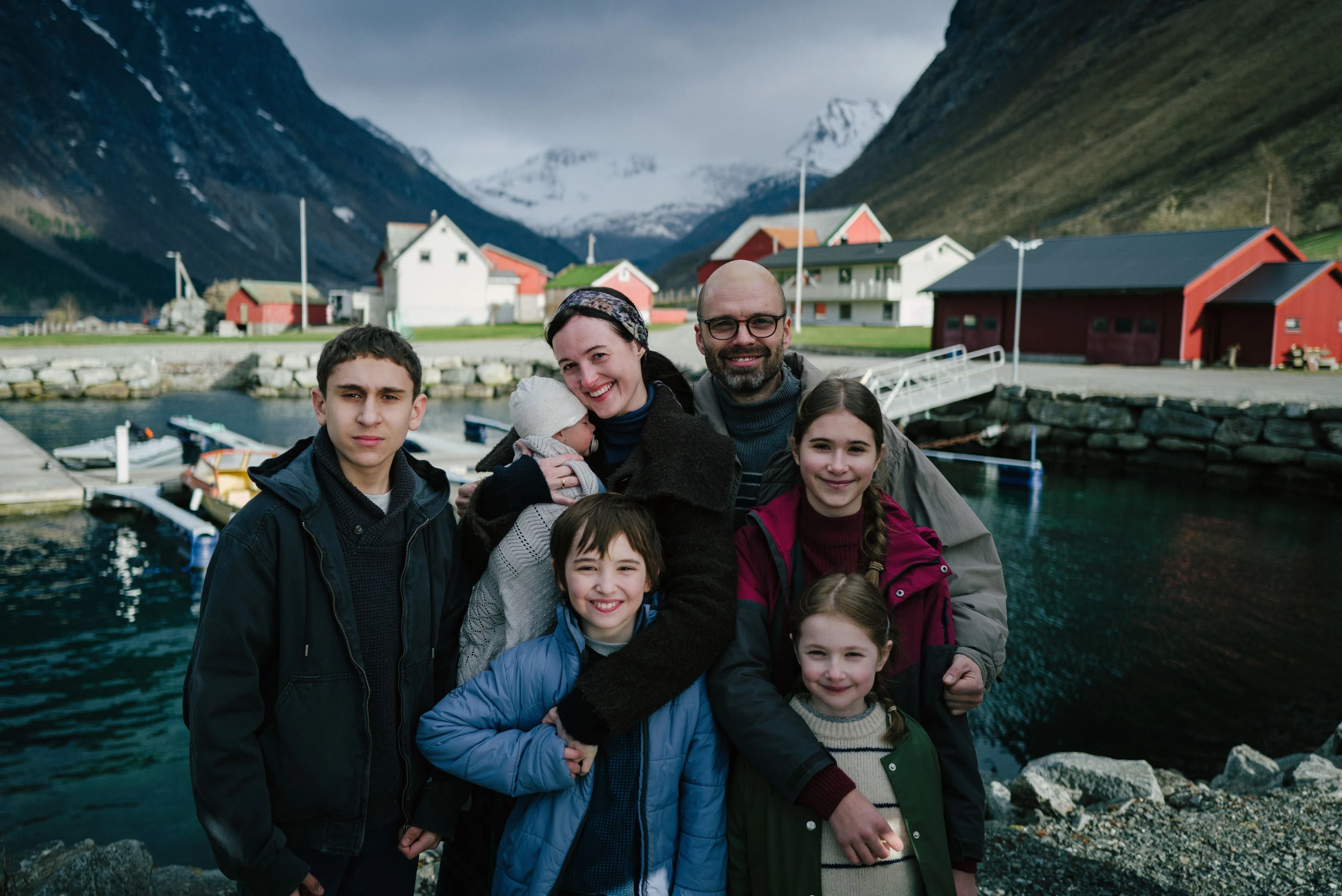
Several award-winning films are celebrating their German premieres in Hamburg. Cristian Mungiu won the Palme d’Or 2026 in Cannes with Fjord. The drama starring Sebastian Stan and Renate Reinsve tells the story of a Romanian family whose new beginning in Norway raises a fundamental question: Where does social tolerance end, where does state interference begin? After almost a decade, Andrey Zvyagintsev returns to the screen with Minotaur. His thriller about power, corruption and modern-day Russia was awarded the Grand Prix in Cannes, where Javier Ambrossi and Javier Calvo received the directing prize for La bola negra. Their film weaves together three life stories spanning almost a century into an epic tale of love and history. The feature film debut La Gradiva by French cinematographer Marine Atlan won the main prize of the Semaine de la Critique. This coming-of-age story accompanies a French school class on an excursion to Pompeii. The Jury Prize in the Un Certain Regard section was awarded to Elephants in the Fog by Abinash Bikram Shah. This debut film follows a transgender community in a remote Nepalese village. The animated film Iron Boy by Louis Clichy won the Special Jury Prize in this section. It centres on an eleven-year-old boy who discovers a new sense of freedom and a love of music through an iron corset.
Alongside the award-winning films, the programme features further works by renowned directors. Martin McDonagh presents Wild Horse Nine, a black comedy starring John Malkovich, Sam Rockwell and Steve Buscemi, in person in Hamburg. Shortly before the military coup, two CIA agents on Easter Island get caught in a web of past and conspiracy. In Just an Illusion, Éric Toledano and Olivier Nakache explore family, memory and Jewish identity. The directing duo will present their film in Hamburg and talk about the art of telling stories for an audience of millions at the Explorer Konferenz. Danny Boyle looks back with INK to 1969 and the beginning of a media revolution. The film opened this year’s festival in Venice. From Asia comes Nowhere to Lay My Eyes by Hong Sangsoo, among others, in which a family reunion in Jejudo reveals old tensions. In The Samurai and the Prisoner, Kiyoshi Kurosawa combines samurai film and whodunit to create a chamber drama about crimes in a besieged castle. In Let Us Through, Dear Ancestors, Lav Diaz intertwines colonial history and family conflicts on a Philippine island in 1617. In Possible Love, Lee Chang-dong exposes class differences and secret desires when two families meet. Sara Ishaq tells the story of Yemeni women’s struggle for survival in The Station, Manuela Martelli examines Chile after the end of the Pinochet dictatorship in The Meltdown. Also featured is Ketticè, the second feature film by Giovanni Tortorici about the young generation in Palermo during the Berlusconi era. In A Bit of Light, Ali Asgari tells the story of a disillusioned Iranian doctor and his family with gallows humor. In Forgotten Island by Joel Crawford and Januel Mercado, two friends must fight for their memories of one another.
On course for the Oscars
Countries from all over the world are gradually announcing which film they are submitting for the 2027 Academy Award for Best International Feature Film. Alongside Fjord (Romania) by Cristian Mungiu and Coward (Belgium) by Lukas Dhont, FilmFest Hamburg has other national entires in its program: In The Meltdown (Chile) by Manuela Martelli, the disappearance of a teenager in the Andes becomes an allegory of the silence in post-Pinochet Chile. Dua (Kosovo) by Blerta Basholli follows a 13-year-old teenager in Kosovo in the late 1990s, between war and adulthood. In How to Divorce During the War (Lithuania) by Andrius Blaževičius, a planned divorce is thrown into disarray by the outbreak of Russia’s war of aggression against Ukraine. In Possible Love (South Korea), Lee Chang-dong exposes class differences and secret desires when two families meet, and in Strawberries (Morocco) by Laïla Marrakchi, two Moroccan seasonal workers fight against exploitation in Spain.
Strong Hamburg themes and images
With Sternbrücke Forever, Christian Hornung documents the end of a chapter in Hamburg’s urban history. His film portrays life on and under the old Sternbrücke in the Schanzenviertel: Mehmet sells falafel, Martina runs a kiosk, Stefan repairs cars, and on weekends, visitors flock to the clubs under the more than hundred-year-old railway bridge. The demolition changes an entire district. The film combines the portrait of a place and its people with questions about urban development, subculture and affordable living.
After more than five decades under John Neumeier, the German-Argentinian choreographer Demis Volpi takes over the direction of the Hamburg Ballet. Kim Hess accompanies him in her film BETWEEN TIMES – The Hamburg Ballet in Transition through rehearsals, premieres and discussions during his first season. The portrait of an artistic new beginning increasingly develops into the chronicle of a change of leadership under public scrutiny.
Fatih Akin’s poetic drama Geister (Ghosts) is set against the backdrop of Hamburg,. On the night of their first meeting, Farasha dies. But she finds a way to make contact with Faris: she can meet him in his dreams for 40 nights. In this way, the two experience their young love beyond death, while the last night together draws inexorably closer. The screenplay was written jointly by Ruth Toma and Fatih Akin.
Televisionen & FilmFest Hamburg Junior
The selected films in this section also address the questions of freedom, connection and new beginnings. Freedom and the threats it faces are at the heart of David Nawrath’s political drama series Breitscheidplatz 19/12, starring Albrecht Schuch, which focuses on the attack on the Berlin Christmas market and examines how a free society deals with threats and extremism. Solidarity is at the centre of LORD by Hamburg director Caren Wuhrer: a 17-year-old and a 78-year-old, both on the fringes of society, meet in Steilshoop. The Third Wedding by Mirjam Unger, starring Iris Berben, also revolves around family ties. Die Friesenjunkies by Emil and Oskar Belton tells the story of a fresh start – an improvised dramedy about people in a rehabilitation centre on Sylt. The Junior programme explores self-determination, friendship and the question of finding one’s own path. Shaun the Sheep: The Beast of Mossy Bottom opens the section under its new name with a new Aardman adventure. Allan Deberton’s Gugu’s World tells the story of an almost twelve-year-old boy from Brazil who dreams of a career as a football player. In Pukam Pukai by Abhay Punjabi, three children, three big dreams and a summer in Delhi come together.
Juries and Awards
Renowned filmmakers, industry representatives and students from Hamburg will once again decide on the award winners in the expert juries this year, including actors Anne Ratte-Polle and Johannes Hegemann, director Sonja Heiss, screenwriter and dramaturg Vic So Hee Alz, media manager Leila Hamid as well as the producers Philipp Trauer, Maren Knieling, Vanessa Ciszewski and Solmaz Azizi.
FilmFest Hamburg’s awards include the Hamburg Producers Award International Cinema Co-Productions and German Cinema with 25,000 euros each (donated by the Ministry of Culture and Media of the Free and Hanseatic City of Hamburg) and the Hamburg Producers Awards German Television Films & German Series with 35,000 euros (donated by VFF Verwertungsgesellschaft der Film- und Fernsehproduzenten mbH). In addition, there is the Political Film of the Friedrich Ebert Stiftung with 10,000 euros, the NDR Young Talent Award with 5,000 euros, the Arthouse Cinema Award with the support of MOIN Filmförderung Hamburg Schleswig-Holstein with 25,000 euros, the FilmFest Hamburg Audience Award with 5,000 euros and the Junior Film Award MAJA with 10,000 euros. The Albert Wiederspiel Award for International Film Directing, donated by the Hapag-Lloyd Foundation and endowed with 10,000 euros, goes to Rafiki Fariala in 2026 for his autobiographical musical drama Congo Boy, in which a 17-year-old refugee in Bangui lives between responsibility for his siblings and his dream of a career as a musician.
Industry meets Hamburg
From 28 September to 1 October, the FilmFest Hamburg Industry Days will bring together producers, distributors, world sales, cinema operators and other industry professionals. The programme, which has been expanded since 2025, brings together European Work in Progress (EWIP), the International Film Distribution Summit (IFDS), Made in Germany and the Explorer Conference with panels, workshops and lectures under one roof. Highlights include the keynote speech “The Science of Laughter” by neuroscientist Sophie Scott (University College London) on the effect of laughter on the brain and its significance for storytelling and comedy, the Made in Germany panel How does the Oscar campaign actually work? and the session Inside Asian-European Co-Production on new cooperation models between Asia and Europe. Young talent and professionalisation programmes such as #Atelier and Encourage Film Talents as well as international delegations complement the programme. The Industry Days are aimed at accredited trade visitors and media representatives; the Explorer Konferenz and the IFDS events are only accessible with an Industry Accreditation PLUS.
Free Admission Day
For the third time, FilmFest Hamburg invites you to the “Free Admission Day”. On 3 October, the last day of the festival, 37 films will be screened. The screenings in the five festival cinemas and nine participating “FilmFest ums Eck” cinemas are free of charge. Up to five tickets per person can be booked online in advance; further contingents will be activated gradually. Thanks to funding from the Hapag-Lloyd Foundation, many films could be subtitled in German. Deutsche Fernsehlotterie is also involved again as a sponsor, enabling, amongst other things, accessible versions for people who are visually impaired, deaf or hard of hearing. Accessible versions are available via the GRETA app for this year’s programme.
Special Screenings
The Hapag-Lloyd headquarters on Ballindamm is once again opening its doors for two special festival screenings, right in the heart of Hamburg city centre, with guests on hand for a discussion. The programme features two documentaries about extraordinary artists from the worlds of music and fashion and life in the spotlight: The Prince and the Emperor – Yves Saint Laurent and Karl Lagerfeld by Olivier Nicklaus (30 September, 7.30 pm) traces the famous rivalry between the two fashion designers. Esther by Shaked Goren (1 October, 7.30 pm) portrays Esther Ofarim, interweaving late-night telephone calls between Tel Aviv and Hamburg with rare archive footage. As part of this year’s Deep Dive Production Design series, production designer Sarah Greenwood and set decorator Katie Spencer will offer insights into their long-standing collaboration and the design of the film world of Barbie during a free masterclass at KINOPOLIS on 29 September; this will be followed by a screening of Greta Gerwig’s film at the Dolby Cinema.
Meeting Points & Parties
Festival meeting points for all festival visitors and industry representatives during the festival period are the MOIN FilmFest Café at CinemaxX Dammtor (from 25 September, 9.30 am–12 noon and 3 pm–9.30 pm) and the FilmFest Bar @CODA CLUB, Congressplatz 2 (26 September – 3 October from 9.00 pm), opposite the CinemaxX. Talks, parties, DJ sets, concerts and karaoke take place here.
The accreditation desk is open continuously from 9.30 am to 5.30 pm (except on 24 September: 12.00 – 17.00).
Advance ticket sales for FilmFest Hamburg begin on 10 September 2026 at 11.00. “Die Gelbe Stunde”, a presale event at the Levantehaus, takes place on 9 September from 17.00 to 20.00.